
Quick Advice
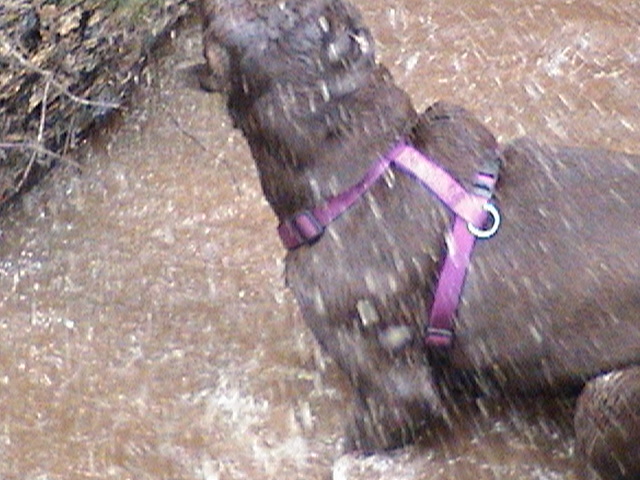
After training our chocolate lab Bella to stop pulling so hard with the gentle leader we then transitioned her to a Y- harness. Note: the name comes from the Y on the dog’s chest, some may call it a H harness if you look at their back. Too confusing! Anyway, the fully Y chested harness really worked for us. When we first tried the full harness she pulled us around like a a sled dog. So we knew we had to use the gentle leader until she became more manageable. It turns out that what I observed with her is backed by a growing body of peer-reviewed studies. With so many choices out there for harnesses, this blog aims to fully support the “Y” shaped harness as science approved compared to more restrictive “no pull” harnesses!
Recommended gear from experiences with our chocolate lab Bella:
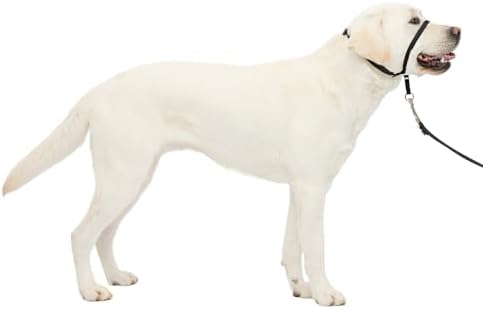
Gentle Leader: My top pick for its precision steering.
Full Chest Harness: Great for dogs once they have been trained to stop pulling.
Tip: Buy the new version with 3 buckles so you do not need to pull it over dog’s head.

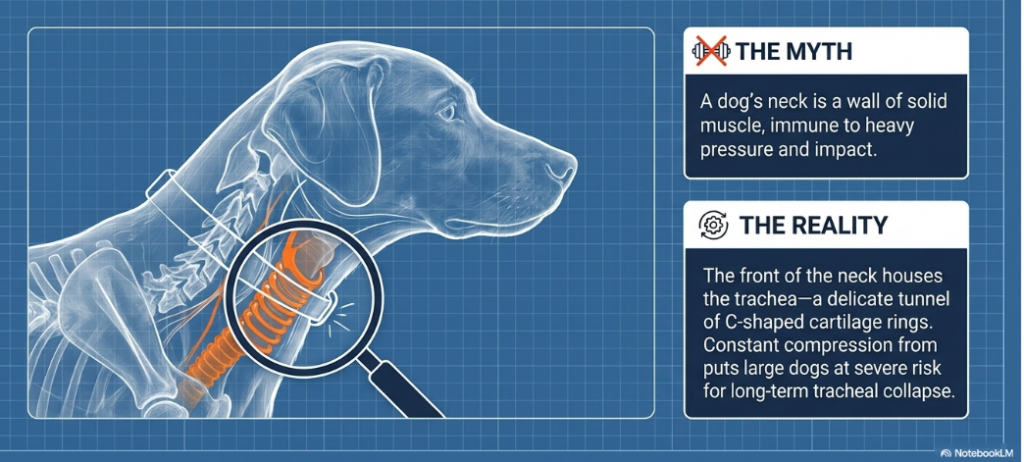
1. The Tracheal Threat using a Traditional Collar
The studies and experience clearly demonstrate how collars put concentrated pressure on the ventral neck. For dogs prone to “honking” coughs or wheezing, this pressure can lead to permanent tracheal collapse [1]. To protect the respiratory system, a harness is a non-negotiable. However, not every harness is built with same safety in mind.
2. The Science of Shoulder Extension
The biggest variable in harness safety is where the chest strap sits relative to the shoulder joint.
- The Restrictive Bar: Many popular “no-pull” harnesses use a horizontal strap across the chest. Science shows that when a strap crosses the shoulder blade, it interferes with shoulder extension [2]. Over time, this can lead to chronic forelimb lameness.
- The Y-Frame Solution: A true Y-frame harness positions the contact point above the shoulder joint. This places the load on the manubrium—the stable breastbone designed to support the body’s mass—leaving the front legs free to move naturally [3].
3. Why Fit is as Important as Style
Recent 3D motion capture studies suggest that a Y-harness is only effective if it is adjusted correctly to the individual dog [4]. Ideally you should pick a harness with complete adjustable straps or ability to change over time as your dog might grow. It allows for a precise fit so the neck stays clear of the shoulder joints, regardless of the dog’s unique conformation.
The Sweet Spot for the Harness should connect right between the shoulder blades!
Verified Bibliography
1. Cornell University College of Veterinary Medicine.Tracheal Collapse in Dogs.
https://www.vet.cornell.edu/departments-centers-and-institutes/riney-canine-health-center/canine-health-information/tracheal-collapse
2. Lafuente MP, Provis L, Schmalz EA (2019).Effects of restrictive and non-restrictive harnesses on shoulder extension in dogs at walk and trot. Veterinary Record.
https://pubmed.ncbi.nlm.nih.gov/30455191/
3. Zink C. Expert commentary in canine sports medicine regarding gait restriction and repetitive strain
https://caninesports.com/
4. Pálya Z, Rácz K, et al. (2022).Development of a detailed canine gait analysis method for evaluating harnesses: A pilot study. PLOS ONE.
https://journals.plos.org/plosone/article?id=10.1371/journal.pone.0264299