Quick Summary
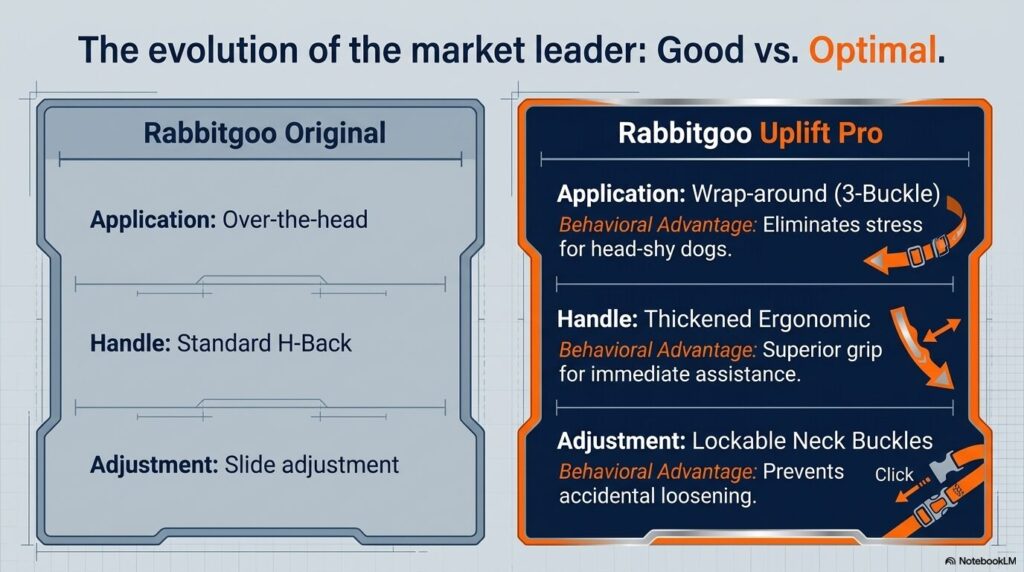
Recent research defines the human-dog relationship as an “Entangled Bond,” where the dog and the owner are joined as a single physiological unit (a dyad). This is a fancy way of saying that you and your pet are scientifically connected in a very real way. So, the next time you are walking your dog for some physical exercise, think of it as a time for you to also allow stress and calmness to flow back and forth between you and your pet. The leash connection is critical. So, dyadic balance would occur more often when you feel in control of you animal and your animal senses this secure connection. I wrote about training my chocolate Bella without breaking her spirit. I used a gentle leader. But, as I recommended this to my friends, their dogs sometimes became reluctant for the over the head type harness. So, as an alternative, I suggested the 2 clips harness below which was lower pulling but still over the head. Recently, rabbitgoo adding a 3rd buckle so the harness does NOT go over the head. YES!



My Entangled Bond
I have already talked a great deal about my bond I shared with my chocolate lab, Bella. She really seemed to be there for me on my bad days and knew how to nuzzle up and ask for a little extra affection. In turn, she got attention, wagged her tail and I felt better….. she felt better (dyad). The latest science from the University of Warsaw describes the dyad’s importance. So when we walked outside (or Bella tried to run with me behind) it was annoying. If I was becoming frustrated, then those feelings would eventually carry over to her. Eventually I went with a training gentle leader and then a Y shaped chest harness. It was a great combination for me. Both harnesses also have an ergonomic handle to reach down and secure the dog to maximize the feeling of connection between you and your dog.
Strict Evidence-Based Analysis: The Warsaw Findings
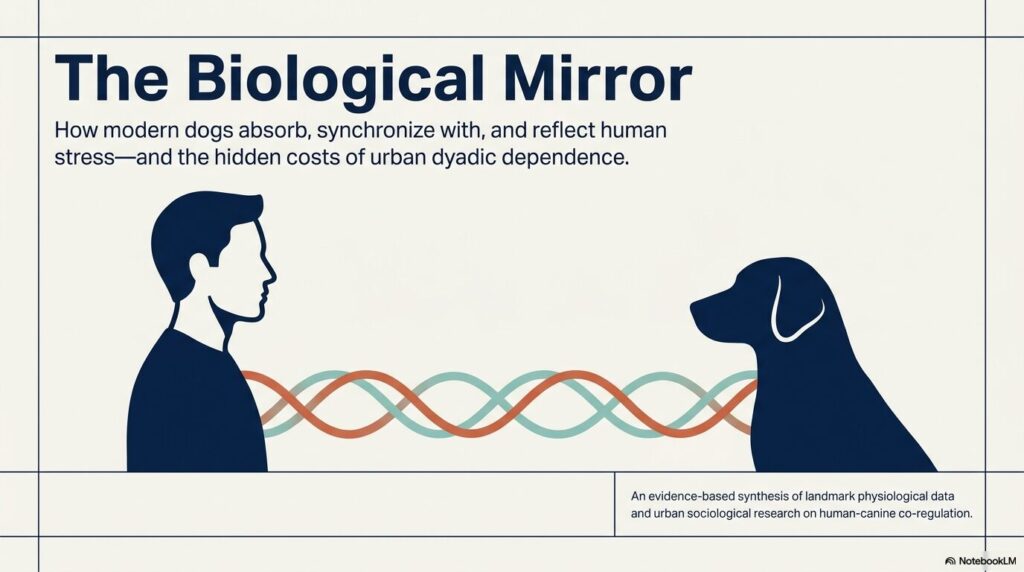
The foundational framework from Grynkiewicz, Reinholz, and Imbir (2026) was published in Animals. They argue that in today more urban environments, the human-dog relationship has evolved into a state of Dyadic Dependence. Humans need to feel connection to someone or something, it makes us live longer! As our connection with nature diminishes, we rely more on this bond to pets and the enjoyment of getting outside to exercise them as is deeply important.
According to Grynkiewicz et al. (2026), urban dogs often face a “compression” of social networks, leaving them primarily dependent on their human for emotional regulation. This creates a Bio-Behavioral Co-Regulation loop with two major components:
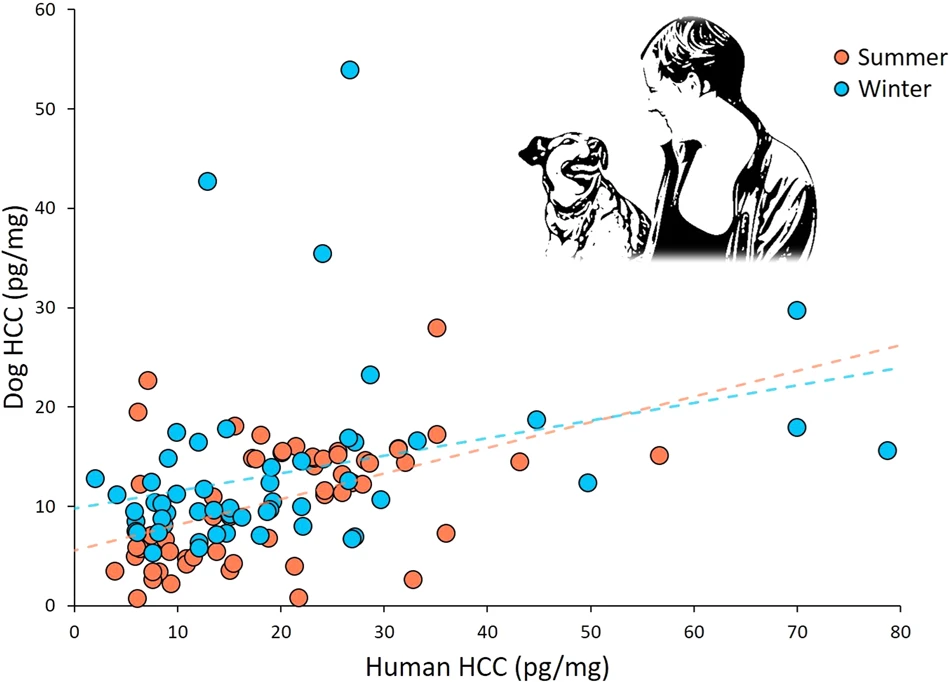
- Physiological Synchrony: The researchers found that humans and dogs often “settle” emotionally together. This builds on previous work by Sundman et al. (2019), which proved that long-term stress levels (cortisol) in dogs are directly synchronized with their owners.
- The Leash as a Conductor: Because the leash limits a dog’s autonomy, the dog becomes hyper-sensitive to human “chemosignals” and micro-tensions. Grynkiewicz et al. (2026) note that “care becomes increasingly organized through supervision,” which means if you feel calm and in control, your dog should feel the same way.
Visualizing The Dyadic Shift
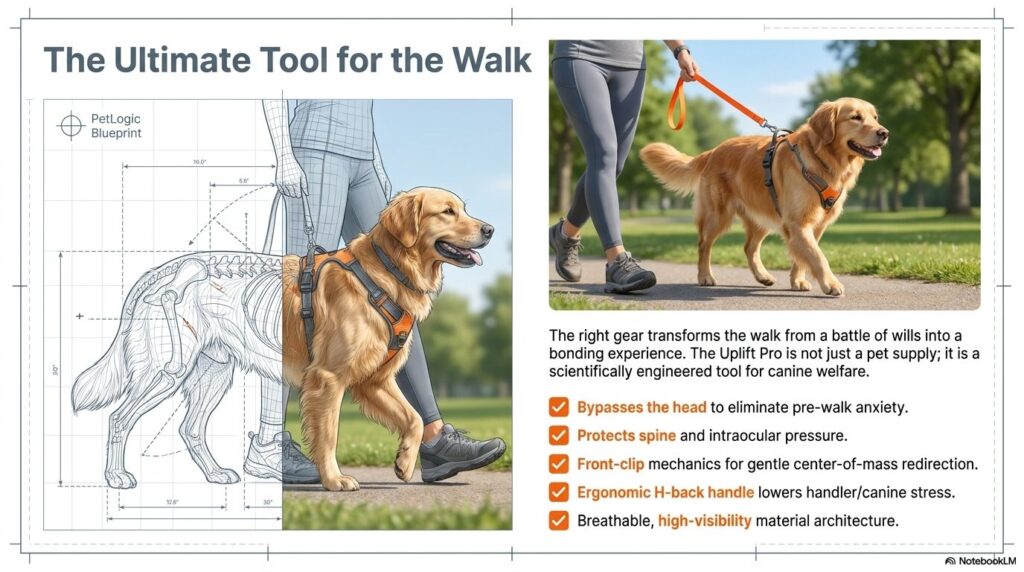
The transition from seeing a dog as an independent “walker” to part of a shared system requires a shift in gear and mindset. It becomes critical to make a good choice to ensure the dyadic balance.
Vetted Bibliography
- Sundman, A. S., et al. (2019). Long-term stress levels are synchronized in dogs and their owners. Scientific Reports, 9(1), 7391.https://doi.org/10.1038/s41598-019-43851-x
- Grynkiewicz, A., Reinholz, A., & Imbir, K. (2026). Entangled Bonds: Dyadic Dependence and Co-Regulation in Western Urban Human–Dog Relationships. Animals, 16(5), 715.https://doi.org/10.3390/ani16050715