
We learned that befriending a stray cat is a lesson in patience, routine, and strict boundaries. Unlike domesticated indoor pets, feral cats operate on sharp survival instincts so even getting close to them may spook them. So, successfully socializing a stray requires a predictable food schedule, quiet an non-threatening communication, and providing things like a heated weather-proof cat house.
Quick Take:
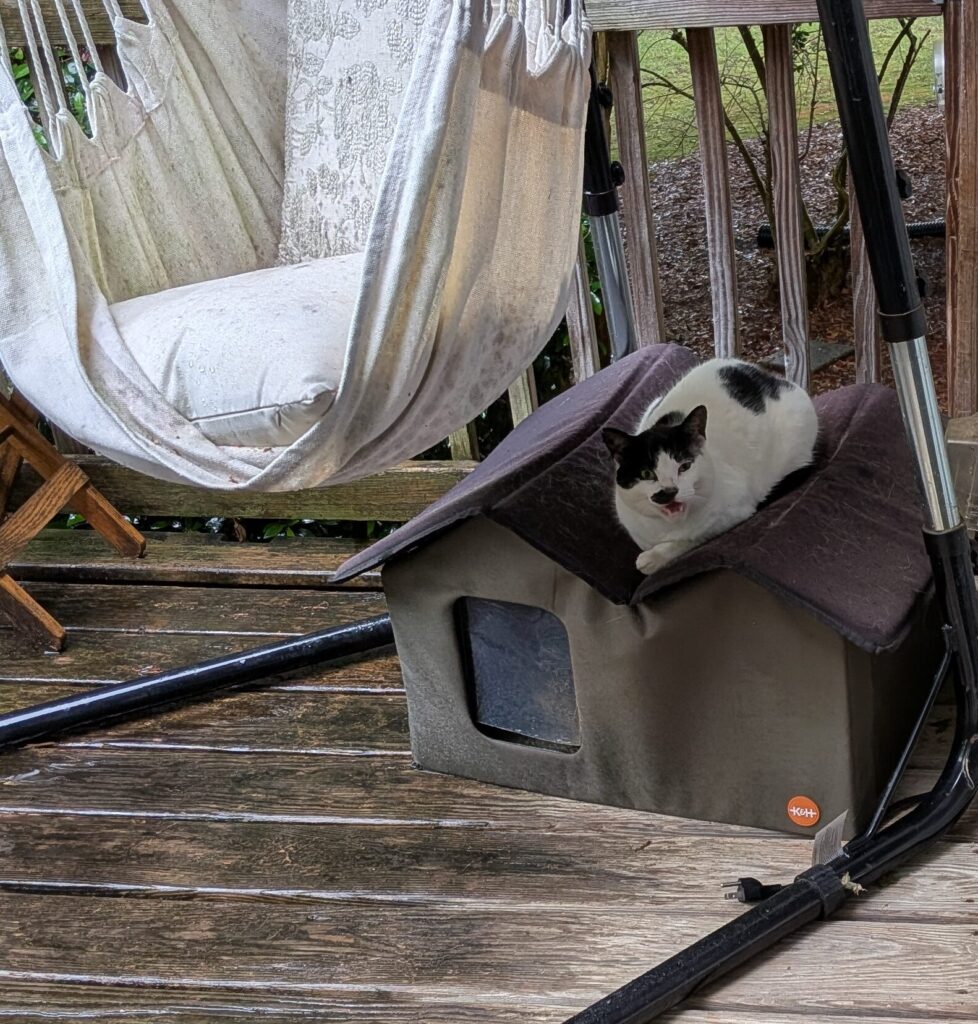
If an outdoor cat has chosen your yard, providing insulated safety is the ultimate way to secure a lasting bond. We highly recommend utilizing the water-resistant, thermostatically controlled Cat House on Amazon to give them a secure, warm territory that honors their independence while protecting them from harsh weather elements.
Meeting Cowie our Outside Cat
Almost two years ago, just as fall was settling in, a beautiful stray cat appeared on our back porch. She just started hanging around but seemed to be in perfectly good condition. So we started luring in with a little bit of tuna!
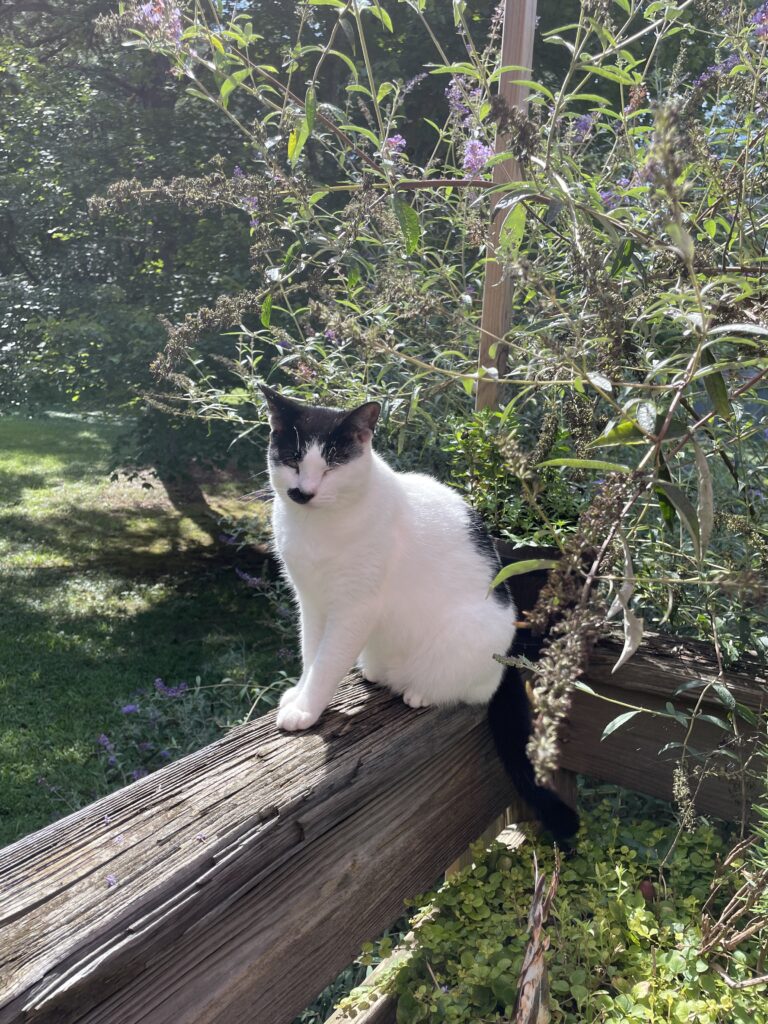
We named her Cowie, inspired by her striking coat, mostly white with distinct black spots that made her look like a tiny Holstein dairy cow. She was as adorable but unapproachable. From the very beginning, Cowie made one thing clear: she was not interested in getting too personal. Hissing was her preferred form of communication. She would hiss at us before food, during eating, and after food.
That didn’t stop my daughter. Home from college for fall break, she decided Cowie needed a proper welcome meal and placed a full can of tuna out on the deck. True to her cautious nature, Cowie waited until my daughter was safely back inside before making her move and then devoured every bite.
Before long, Cowie became a regular. I took things up a notch, stocking up on bulk Friskie’s canned food, and morning feedings became a firm routine. Yet, every morning without fail, she would hiss as I stepped onto the deck. It was her way of saying, “I’m here for the food, not the friendship.”
Slowly, something shifted. One morning, she did her usual hiss, but then walked over and rubbed her body right against my leg. It felt like a massive breakthrough! Encouraged, I reached down and gently petted her back. She loved it.
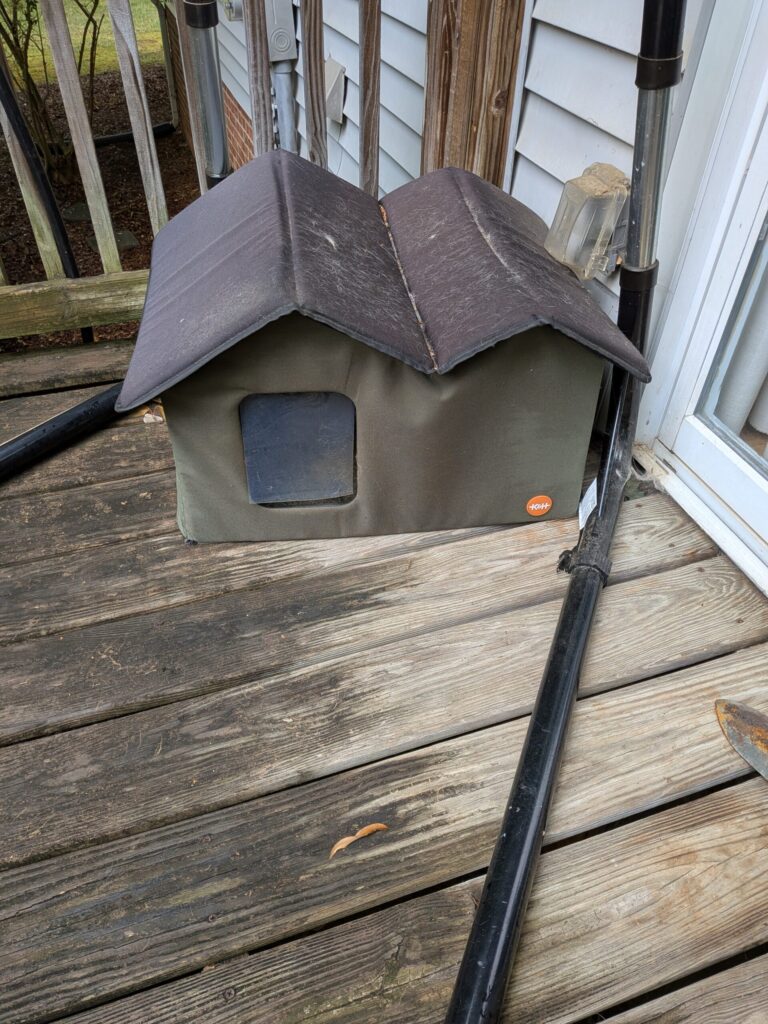
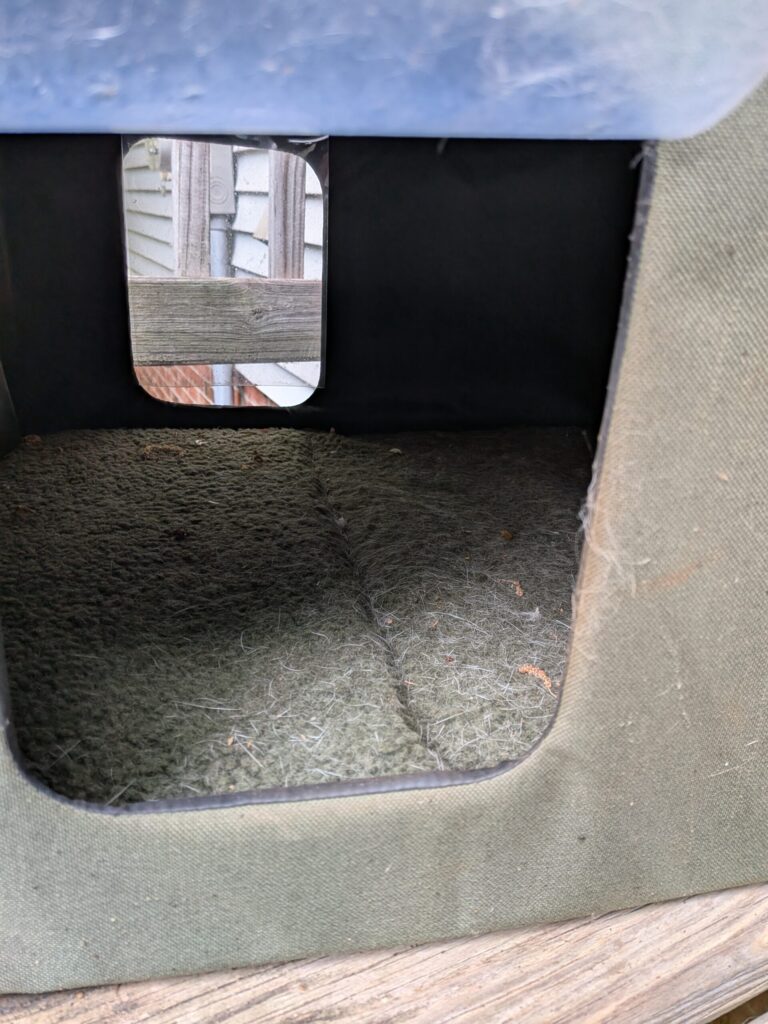
But then, late spring threw us a curveball. I spotted her lounging on the deck at sunset and approached for a casual pat. Hiss. Scratch. Message received! No food, no love. Cowie had drawn her boundaries. I had to accept that she preferred her independence. She wasn’t going to be an indoor lap cat and that was okay. But as winter approached, I couldn’t stand the thought of her out in the cold. That’s when I ordered a specialized heated outdoor Cat House on Amazon , and she moved in immediately. Cowie has not become the cat we expected but she is still slowly taming to us.
Science Behind Cowie’s Behavior
What looks like erratic “Jekyll and Hyde” mood swings from an outdoor cat is actually perfectly explained by feline psychology. Human interaction is highly reinforcing to cats but only when it is delivered entirely on the cat’s explicit terms.
Domestic cats exhibit highly distinct attachment styles toward humans, ranging from securely connected to deeply avoidant. For an outdoor stray, human contact represents a high-risk conflict: the desire for calorie-dense food versus the biological impulse to avoid potential predators.
When a human attempts to pet a stray cat outside of a context they have pre-approved (such as active feeding), it frequently triggers defensive aggression, the hiss-and-scratch reaction. This isn’t stubbornness; it is an instinctive reflex brought on by sudden overstimulation or feeling cornered.
To safely stabilize a bond with an avoidant outdoor cat, focusing on resource provision is far more effective than forcing physical handling. Providing an insulated, heated structure gives the cat a vital sense of security and control over their physical environment.
When an outdoor cat’s baseline survival needs (warmth and calories) are reliably met via a secure micro-environment, their baseline stress levels drop. Cats with dedicated outdoor shelters display a significantly higher baseline of behavioral stability, ultimately leading to much more predictable, voluntary interactions with their human caretakers when food is around.
Guided Recommendations
- Establish Predictable Feeding Zones: Feed the cat at the exact same time every morning. Predictability reduces environmental stress in free-roaming animals, shifting them from defense mode to social curiosity.
- Respect Contextual Boundaries: If the cat only accepts affection while the food bowl is being served, limit your handling to that specific window. Avoid approaching them during rest or lounging hours.
- Provide Elevated Shelters: Place your outdoor cat house on an elevated deck or sturdy platform. Elevating the structure protects the cat from ground moisture and fulfills their biological drive to monitor their surroundings from a safe vantage point.
My Verdict: Earning the trust of our stray cat required abandoning our own expectations of what pet ownership “should” look like. We are grateful to be able to provide food, water, and shelter for her.


