
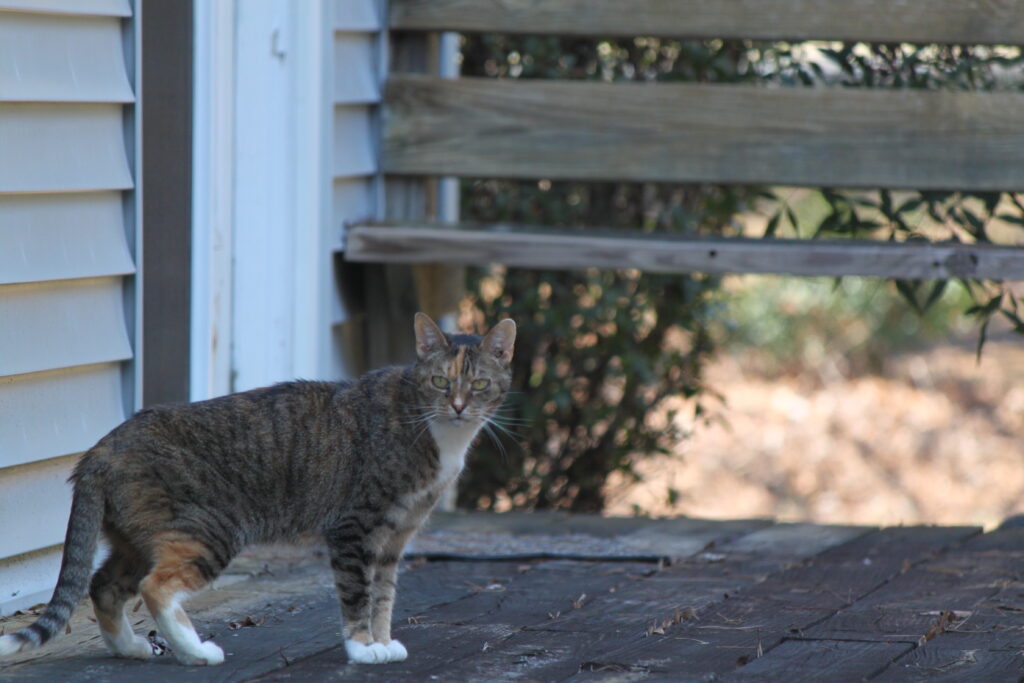
If you’ve ever walked across your living room and felt that telltale crunch of clay granules under your bare feet, you know my pain. For years, I lived in the ”Messy Era.” My cats at the time, Goldie and Sunshine, were adorable, but they were essentially furry transport vehicles for litter.
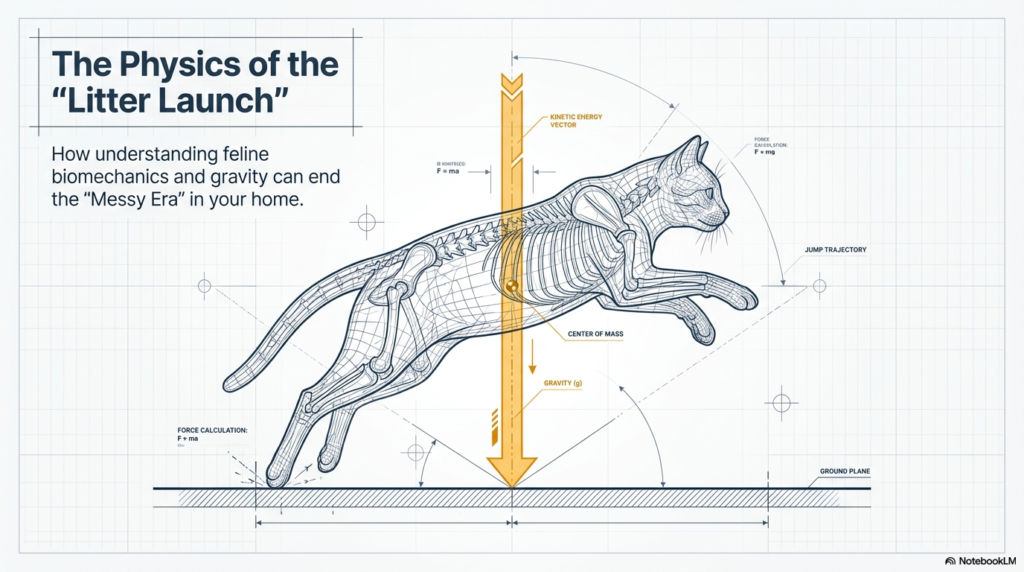
Fed up, I built an elevated, two-story litter box system. The only way out was a jump down—and suddenly, the tracking stopped. It turns out I had accidentally mastered feline biomechanics. Here is the “Science Simplified” version of why Goldie and Sunshine were dropping their cargo before they ever hit my carpet. If you would rather buy a litter box which is similar to my design then please look at my review page for litter boxes.
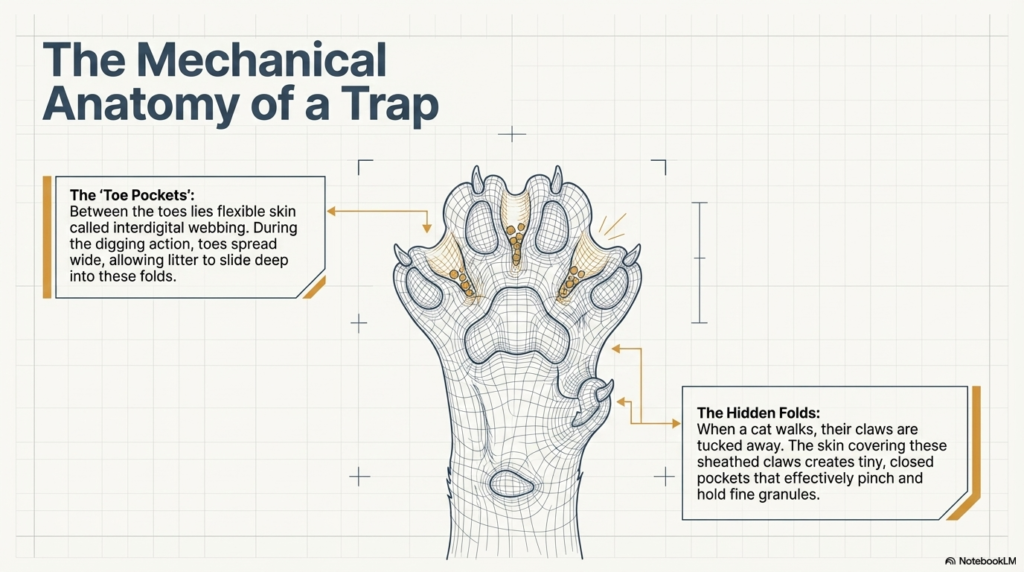
Phase 1: The “Cargo” (How Paws Pick Up Litter)
A cat’s paw is accidentally designed to be a perfect litter-collecting device. When Goldie and Sunshine were digging, three things were working against my vacuum cleaner:
- The “Toe Pockets”: Between a cat’s toes is a flexible skin called interdigital webbing. When they dig, their toes spread, and litter slides into those deep folds [1].
- The Hidden Folds: When a cat walks, their claws are tucked away. The skin that covers those claws creates tiny “pockets” that can scoop up and hold fine granules [4].
- Sticky Paws: Cats actually have tiny sweat glands on their pads. This slight moisture makes their paws just “tacky” enough for fine dust to stick to the fur between their toes [3].
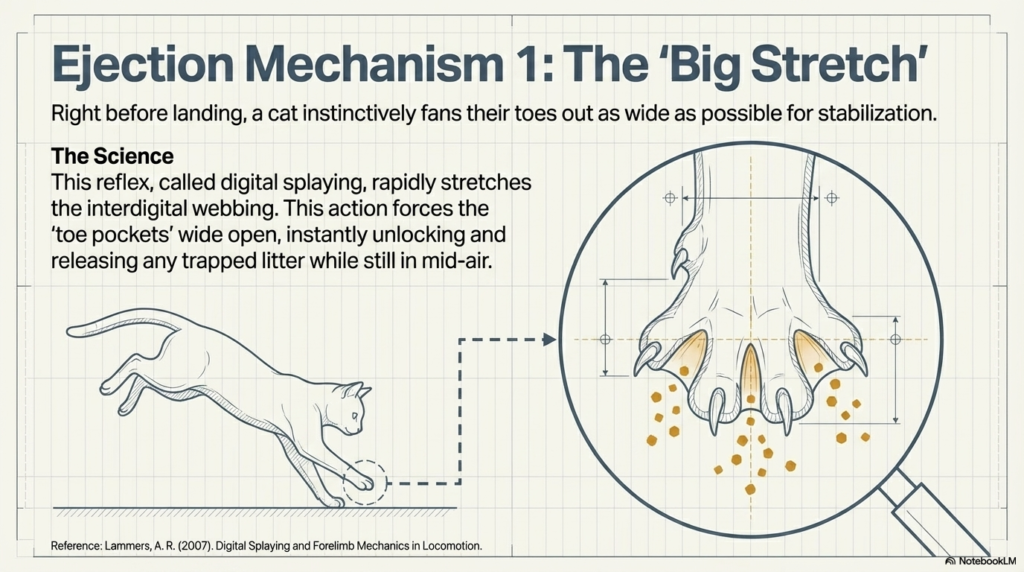
Phase 2: The “Ejection” (Why the Jump-Down Cleans the Paw)
The reason my two-story system worked is that it forced the girls to jump down to exit. That jump triggers two involuntary reactions that “clean” the paw in mid-air.
1. The “Big Stretch” (Digital Splaying)
Right before a cat lands, they instinctively fan their toes out as wide as possible to stabilize themselves.
- The Science: This is called digital splaying. It opens up the “toe pockets” and stretches the webbing, which instantly “unlocks” any trapped litter [1].
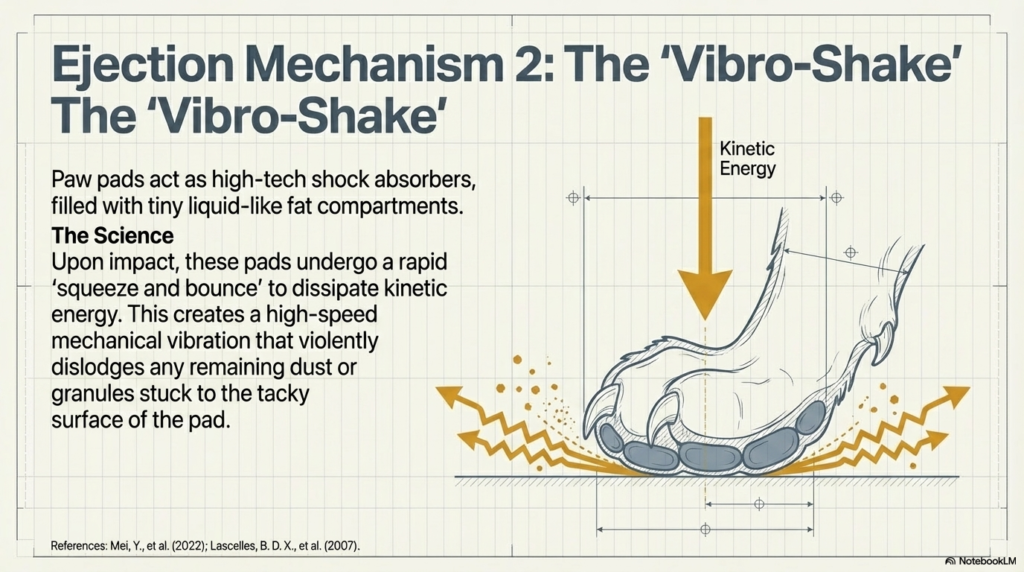
2. The “Vibro-Shake” (Impact Dissipation)
Cat paw pads are high-tech shock absorbers. They are filled with tiny fat compartments that act like liquid-filled cushions [2].
- The Science: When Sunshine hit the floor, her paw pads underwent a rapid “squeeze and bounce” to absorb the impact. This creates a mechanical vibration—basically a high-speed shake—that dislodges any dust or grains stuck to the pads [4].
Science Snap-Shot
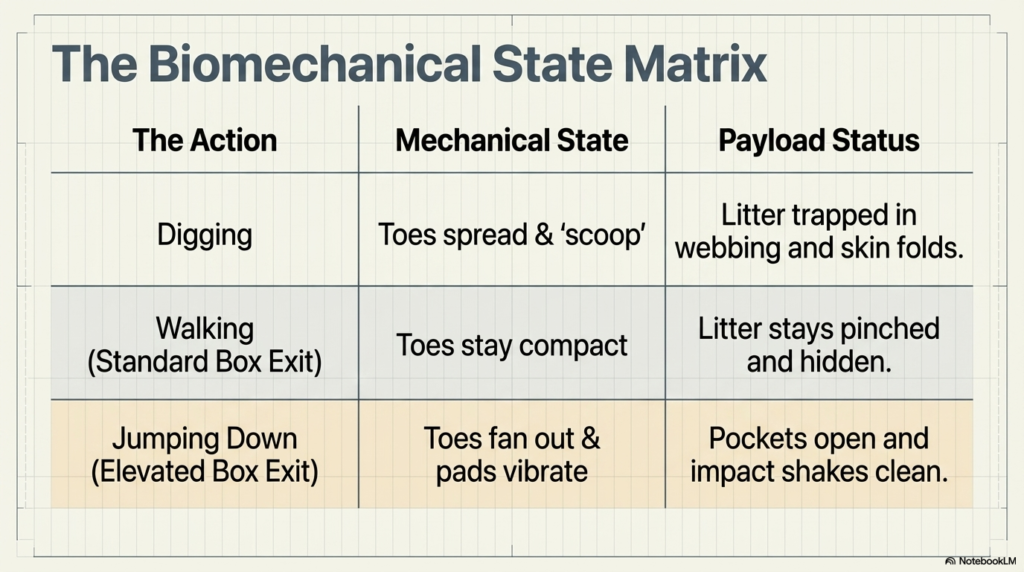
The Verdict: It’s All in the Splay
By making Goldie and Sunshine jump down while still inside the box system, I used their own landing reflexes to do the cleaning for me. The “launch” happened on the mat, not my sofa or kitchen counter.
If your house feels like a beach, don’t just buy a better vacuum—start using physics!
Cited Sources
- Link to article –Lammers, A. R. (2007). Digital Splaying and Forelimb Mechanics in Locomotion. The Anatomical Record. (Explains how animals spread their toes to handle the forces of movement).
- Link to article – Mei, Y., Wang, G., et al. (2022). Investigation of the microstructure and mechanical properties of the domestic cat’s paw pads. Thai Journal of Veterinary Medicine. (Details the “shock absorber” fat pads that vibrate on impact).
- Link to article – Moriello, K. (2013). Feline Dermatology. Wiley-Blackwell. (Information on sweat glands and paw pad moisture).
- Link to article Lascelles, B. D. X., et al. (2007). Kinetic evaluation of normal walking and jumping in cats. Veterinary and Comparative Orthopaedics and Traumatology. (Proves that jumping forces are much higher than walking, providing the energy to “shake” paws clean).